
Chicago furnace replacement and installation
Furnace Installation Chicago IL
Bean’z Heating & Cooling provides furnace installation Chicago IL property owners can plan around equipment sizing, airflow, venting, gas and electrical requirements, thermostat compatibility, and reliable startup—not just the furnace model.
When replacement enters the conversation
Signs it may be time to compare a new furnace
Age alone does not decide whether a furnace should be replaced. Its condition, repair history, comfort performance, safety, energy use, and the cost of the next repair all matter.
Repeated breakdowns
Frequent repair calls can make it worthwhile to compare the cost and reliability of new equipment.
Uneven heating
Cold rooms, long run times, or poor airflow may point to equipment, duct, balance, or building-load concerns.
Rising operating costs
A furnace that works harder than expected may have performance problems beyond one replaceable part.
Major component concerns
The condition of the heat exchanger, blower, controls, venting, and other major components affects the decision.
Home improvements
Additions, insulation work, remodeling, or a changed floor plan can affect the heating load and airflow needs.
Comfort upgrade goals
Variable airflow, quieter operation, better controls, or a matched cooling project may support replacement planning.
Planning before equipment
A furnace should fit the building and duct system
A replacement furnace should not be chosen from square footage alone. The building’s heat loss, insulation, windows, air leakage, layout, ductwork, return-air capacity, and how the space is used all influence the equipment selection.
Oversized equipment may heat quickly but cycle more often, while undersized equipment may struggle during the coldest conditions. Airflow must also match the furnace and the connected cooling equipment. Bean’z reviews the project conditions before finalizing the installation scope.
- Heating-load and capacity considerations
- Supply and return airflow
- Filter size and access
- Venting and combustion-air needs
- Gas piping and shutoff location
- Electrical and disconnect requirements
- Thermostat and control compatibility
- Drainage for condensing equipment
When distribution changes are needed, review our ductwork installation and airflow service.
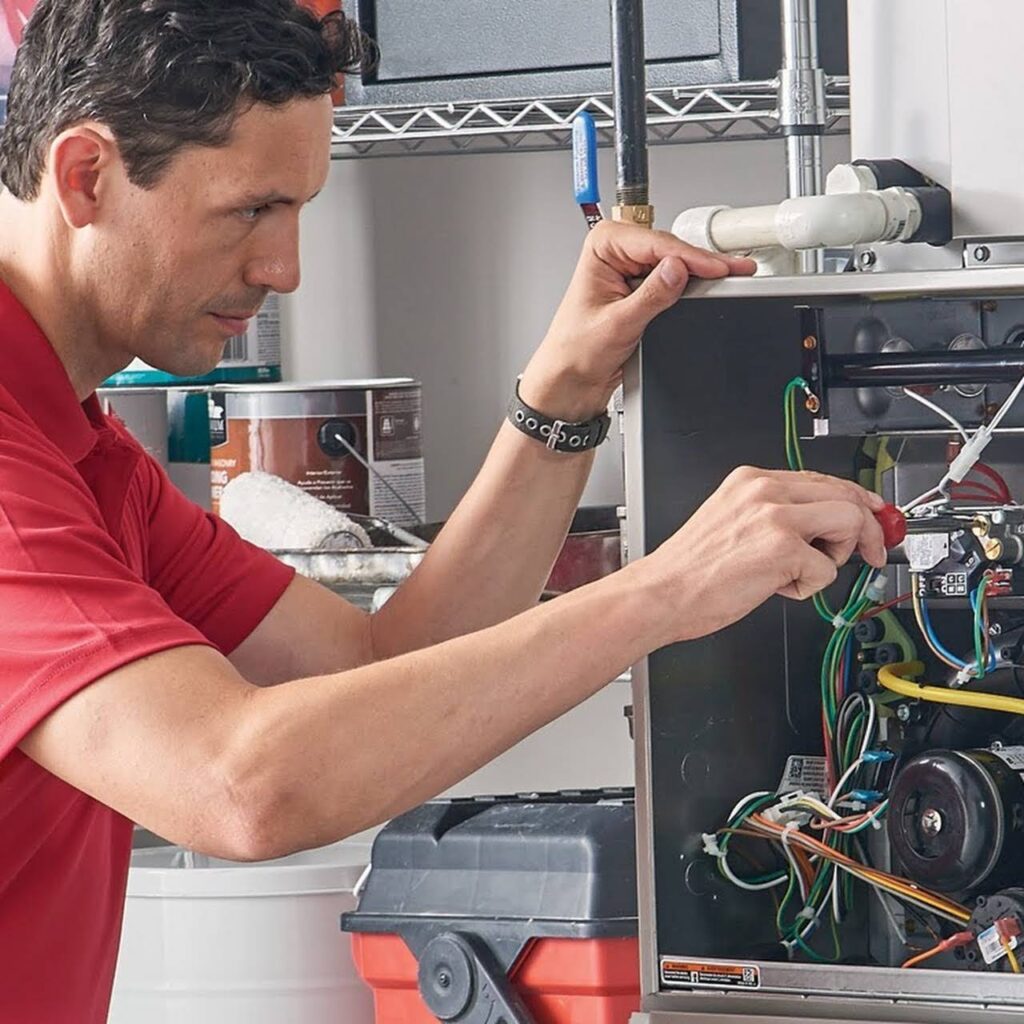
From estimate to startup
Our furnace installation process
The exact work depends on the property and selected equipment, but a well-planned project follows a clear sequence.
Site evaluation
Review the existing furnace, duct connections, utilities, controls, access, comfort concerns, and project goals.
Equipment plan
Compare capacity, efficiency, blower, venting, filtration, thermostat, and compatible system options.
Written scope
Define included equipment, required transitions, utility work, accessories, removal, and expected scheduling.
Installation
Remove the old unit, prepare connections, set the furnace, complete approved work, and check installation details.
Startup review
Operate the system, review applicable readings and controls, and explain basic filter and thermostat use.
What changes from one furnace to another
Compare more than the efficiency number
AFUE is important, but the complete installation also affects comfort, sound, airflow, venting, maintenance access, and how the furnace works with the rest of the HVAC system.
| Feature | Why it matters | What to discuss |
|---|---|---|
| Heating capacity | Capacity should respond to the building load without relying on guesswork or the old furnace size alone. | Load factors, insulation, additions, windows, air leakage, and comfort history. |
| AFUE efficiency | Higher-efficiency furnaces use more of the fuel’s energy for heating but may require different venting and drainage. | Expected use, project budget, vent route, condensate management, and equipment compatibility. |
| Heating stages | Single-stage, two-stage, and modulating operation can affect cycling, sound, and temperature consistency. | Home layout, comfort goals, thermostat controls, and how the system will be operated. |
| Blower operation | The blower must support furnace airflow, filtration, duct conditions, and connected air-conditioning performance. | Static pressure, return-air capacity, filter type, duct restrictions, and cooling requirements. |
| Controls and accessories | Thermostats, humidifiers, filters, and indoor-air accessories need compatible power, controls, and airflow. | Desired features, maintenance needs, available space, wiring, and integration requirements. |
For control options, see our smart thermostat installation guide.
Planning a furnace replacement?
Start with the property, comfort concerns, and existing system—not just a model number.
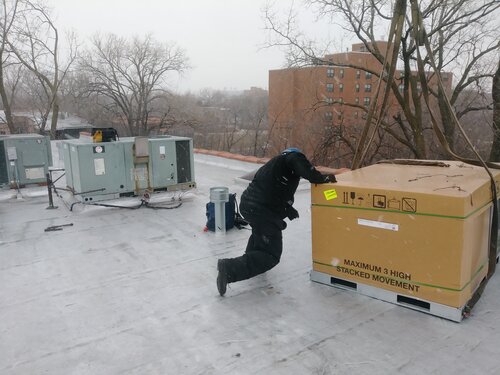
Chicago installation conditions
Older buildings can require extra planning
Chicago homes and small properties can include tight basement access, older masonry chimneys, limited return-air paths, finished spaces around mechanical equipment, shared utility areas, or duct systems altered through years of remodeling. These conditions can affect the furnace, venting method, transitions, filter access, and labor needed for the project.
The installation estimate should identify the accessible conditions that can be reviewed in advance. Some hidden issues are discovered only after equipment is removed or enclosed areas are opened, so the project scope should explain how additional work would be handled if it becomes necessary. Property owners comparing a larger comfort project can also review Chicago AC installation, heat pump installation, and whole-home humidifier options.
Furnace installation questions
Frequently asked questions
How do I know what size furnace my home needs?
Furnace size should reflect the building’s heating load and the distribution system. Square footage is only one factor. Insulation, windows, air leakage, layout, duct capacity, and Chicago design conditions also influence selection.
Can a new furnace use my existing ductwork?
Sometimes. Existing ducts should be reviewed for supply and return capacity, condition, leakage, transitions, filter access, and compatibility with the selected airflow. Corrections may be recommended when the distribution system would limit the new equipment.
How long does furnace installation take?
Timing depends on equipment availability, access, the existing connections, venting, gas and electrical work, duct transitions, drainage, permits when applicable, and the total project scope. The estimate should set realistic expectations.
Should I replace the air conditioner at the same time?
Not automatically. The age and condition of the cooling system, coil and blower compatibility, refrigerant considerations, project budget, and long-term plans all matter. A matched project may make sense in some homes, while furnace-only replacement is appropriate in others.
What maintenance does a new furnace need?
Filters need regular attention, and periodic professional maintenance can help review burners, ignition, electrical components, airflow, drainage, venting, controls, and operating condition. See our Chicago furnace tune-up service.
Plan dependable Chicago heat
Request a furnace installation estimate
Tell Bean’z Heating & Cooling about your current furnace, the property, and the comfort or reliability issues you want the replacement project to address.
Related furnace resources: Visit furnace repair, schedule a furnace tune-up, review furnace installation costs, or request an estimate.