
Boiler Installation & Replacement in Chicago
Bean’z Heating & Cooling plans and installs hot-water, steam, and condensing boilers for Chicago properties. We review the existing boiler, connected piping, radiators, controls, gas, electrical, combustion air, and venting before recommending replacement equipment and project scope. For an operating problem, visit our dedicated Chicago boiler repair page.
When to Consider a New Boiler
This page is for owners comparing replacement or planning a new boiler system. If the boiler is still in service and you need diagnosis for no heat, leaks, pressure, or noise, use our dedicated boiler repair page instead.
Major Equipment Failure
Replacement may be worth comparing when a boiler has a failed section or heat exchanger, unsafe venting, severe corrosion or leakage, obsolete parts, or repeated costly failures.
System Modernization
A project may also be driven by efficiency goals, renovations, zoning changes, updated controls, a condensing-boiler conversion, or changes to the building’s heating load.
Complete Installation Scope
A proper proposal defines boiler type and capacity, near-boiler piping, pumps or vents, expansion control, gas, electrical, combustion air, venting, drainage, permits, startup, and owner guidance.
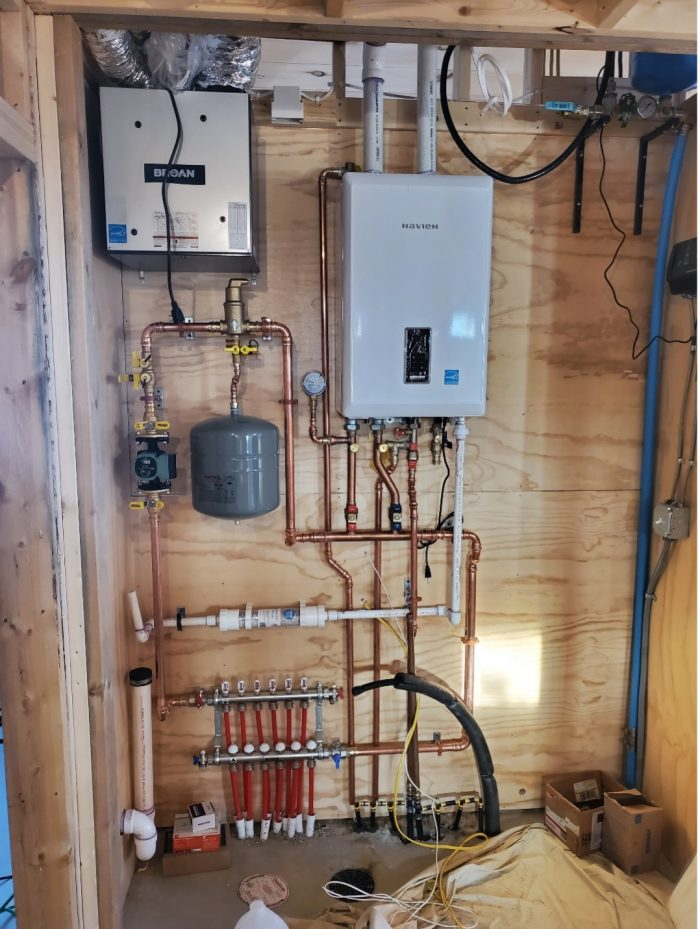
What We Check Before Recommending Equipment
A boiler replacement should be planned around the building and connected heating system, not just the old equipment nameplate. We document the conditions that affect capacity, piping, venting, controls, access, and commissioning before the proposal is finalized.
- Existing boiler type, input, output, efficiency, age, and removal path
- Connected radiation, zones, circulators, steam vents or traps, and distribution layout
- Near-boiler piping, expansion control, air removal, fill components, and drainage
- Gas supply, electrical requirements, combustion air, chimney or direct vent route
- Thermostats, zone controls, domestic-hot-water connections, and planned upgrades
- Permit, inspection, equipment access, floor protection, and startup requirements
The goal is a written scope that explains what stays, what changes, and what must be corrected so the new boiler can operate as designed.
Still researching? Review our boiler replacement planning checklist, then return here when you are ready for a site-specific installation estimate.
What Can Change Your Installation Scope?
Two boiler replacements can use similar equipment and still require very different labor, materials, controls, venting, and piping. These are the conditions we review before finalizing the proposal.
| Project condition | What we evaluate | Why it matters |
|---|---|---|
| Steam system | Connected radiation, header and equalizer, returns, vents, water line, and near-boiler piping | Steam capacity and piping must match the connected system for stable operation and distribution |
| Hot-water system | Heat loss, zones, circulators, expansion control, air removal, valves, and design temperatures | Flow, zoning, and water-side components affect comfort and boiler operation |
| Condensing conversion | Vent route, combustion air, condensate, return-water temperatures, gas, electrical, and controls | High-efficiency equipment may require major changes beyond the boiler itself |
| Chimney or vent changes | Existing chimney condition, liner needs, direct-vent options, termination locations, and code clearances | The venting method can change equipment options, labor, and project cost |
| Older piping or controls | Near-boiler piping, pumps, valves, thermostats, zone controls, and damaged or obsolete components | Keeping defective supporting components can limit the performance of new equipment |
| Tight access or finished space | Removal path, stairs, door openings, floor protection, work area, and equipment dimensions | Access affects equipment selection, labor, protection, and removal planning |
Our Boiler Installation Process
Inspect the Existing System
We identify the boiler type, connected load, radiation, zones, piping arrangement, venting, gas, electrical, drainage, and known comfort complaints.
Size and Select the Equipment
Capacity is based on the building and system—not simply the old boiler nameplate. Steam work also requires connected-radiation review and correct manufacturer sizing procedures.
Write the Project Scope
The estimate explains equipment, piping, pumps or controls, venting, gas, electrical, removal, permits, startup, warranty registration, and anything handled by another trade.
Install and Commission
We complete the approved connections, fill or prepare the system, check for leaks, start the boiler, verify safeties and operation, and confirm that heat is reaching the distribution system.
Review Operation and Care
We explain controls, normal pressure or temperature behavior, maintenance responsibilities, and warning signs that need professional service.
A Complete Proposal Should Clarify
- Exact boiler and rated capacity
- Hot-water, steam, or condensing configuration
- Near-boiler piping and included accessories
- Gas, electrical, venting, combustion air, and drain work
- Removal, permits, inspections, and finish work
- Startup, owner instruction, and warranty registration
Connected Systems Matter
Radiators, baseboard, radiant tubing, piping, vents, traps, pumps, valves, and controls remain part of the heating system after the boiler is replaced. Existing defects should be identified in the scope.
How We Compare Repair and Replacement
Age is only one factor. We compare the confirmed failure, safety, repairability, building needs, installation condition, and total project scope.
Condition & Safety
Heat-exchanger or section leakage, combustion condition, venting, controls, low-water protection, relief operation, corrosion, and water damage affect the decision.
Repairability
Part availability, access, labor, repeat failures, hidden piping issues, and whether the repair restores dependable operation are considered before recommending replacement.
Building & Project Fit
Heat loss, connected radiation, room comfort, planned renovation, domestic-hot-water needs, utilities, chimney condition, and available vent and drain routes shape the replacement plan.
If the building uses forced air instead, compare our Chicago furnace repair and furnace installation services.
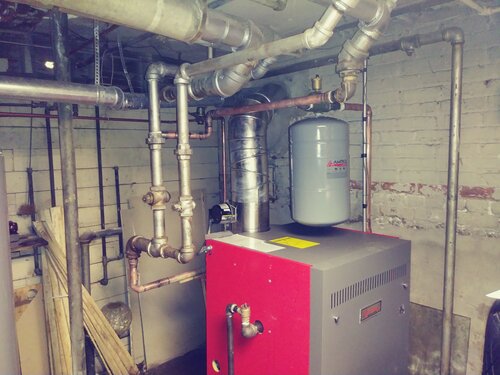
What Affects the Cost of a New Boiler?
A control repair, circulator replacement, steam piping correction, cast-iron boiler replacement, and wall-hung condensing conversion are different scopes. Accurate pricing follows diagnosis or a site evaluation.
- Existing boiler condition, removal access, and installation complexity
- Boiler type, fuel, capacity, efficiency, and availability
- Near-boiler piping, pumps, valves, vents, controls, and water treatment
- Gas line, electrical circuit, chimney, venting, combustion air, and condensate work
- Removal, stairs, occupied-area protection, permits, inspections, and finish work
- Repairs needed in the existing distribution system
No responsible estimate can promise one installed price for every Chicago property without defining what is included and excluded.
Care and Warning Signs After Installation
Professional boiler maintenance should match the equipment and manufacturer. Typical service includes operating and safety checks, visible leak inspection, burner and combustion review where applicable, venting, pressure and temperature, controls, pumps or steam components, and system response.
- Keep the boiler area accessible and free of stored combustibles
- Never cap a relief discharge, bypass a safety, or repeatedly reset a fault
- Watch for water, soot, corrosion, unusual odor, new noise, or pressure changes
- Use working carbon-monoxide alarms in appropriate locations
- Schedule service when heating becomes uneven or operation changes
For other preventive heating service, visit our Chicago furnace tune-up page or ask about the VIP Comfort Club.
Call for Diagnosis When You Notice:
- No heat or repeated lockouts
- Relief-valve discharge or abnormal pressure
- Water leaking from the boiler or connected piping
- Banging, surging, kettling, or new pump noise
- Soot, scorching, venting concerns, or unusual odor
- Cold zones, slow heating, or short cycling
Avoid adding water, bleeding components, or changing pressure controls unless you understand the exact system and manufacturer procedure. Incorrect action can hide the fault or create damage.
When comparing boiler efficiency, homeowners can review ENERGY STAR boiler guidance before discussing equipment, venting, and installation scope.
Boiler Installation FAQs
Do you work on both hot-water and steam boilers?
Yes. Bean’z Heating & Cooling evaluates hot-water and steam systems. The service procedure and replacement design are matched to the boiler type, controls, piping, and heat distribution in the property.
Should I repair or replace an older boiler?
That decision should follow diagnosis. We consider the confirmed failure, safety and venting condition, boiler sections or heat exchanger, repair cost, part availability, repeat problems, efficiency goals, and whether the existing installation fits the building.
Why are some radiators hot while others stay cold?
Possible causes include air in a hot-water loop, circulator or zone-valve problems, closed or restricted flow, balancing issues, steam-vent or trap faults, piping pitch, low steam production, or another distribution problem. Testing identifies which condition is present.
How long does a boiler replacement take?
Timing depends on equipment availability, system type, access, near-boiler piping, venting, gas, electrical, drainage, permits, inspections, and repairs to the existing system. The written proposal should state the expected project window.
Can a new boiler use all of my existing piping and radiators?
Often much of the distribution system can remain, but it must be inspected. Leaks, incorrect near-boiler piping, failed vents or traps, poor flow, damaged valves, sludge, or controls may require additional work.
Do you serve Chicago’s South Side?
Yes. Bean’z Heating & Cooling serves Chicago, especially South Side homeowners, plus nearby suburbs. Call 312-593-6334 to confirm service availability for your address.
Request a Boiler Installation Estimate in Chicago
Request a site evaluation with Bean’z Heating & Cooling for a clear installation scope covering equipment, piping, venting, controls, utilities, removal, and startup.