
South Chicago HVAC Repair & Installation
Bean’z Heating & Cooling diagnoses furnace, boiler, central-air, heat-pump, thermostat, and airflow problems in South Chicago single-family homes and small multi-unit properties. We match the affected floor or rooms to the correct thermostat, indoor equipment, outdoor unit, boiler zone, or duct path before testing and pricing the active repair.
South Chicago HVAC service starts by identifying the property
The CMAP June 2026 South Chicago Community Data Snapshot reports that local housing includes 29.6% detached single-family, 23.4% two-unit, and 20.2% three- or four-unit buildings. It also reports a median construction year of 1934, with 56.7% of units built before 1940.
That mix matters in the field. One address may have a whole-building boiler, separate furnaces and condensers, added central air, older shared venting, remodeled ductwork, or one thermostat zone that does not represent every floor. Bean’z identifies what actually serves the complaint before opening panels or interrupting another area.
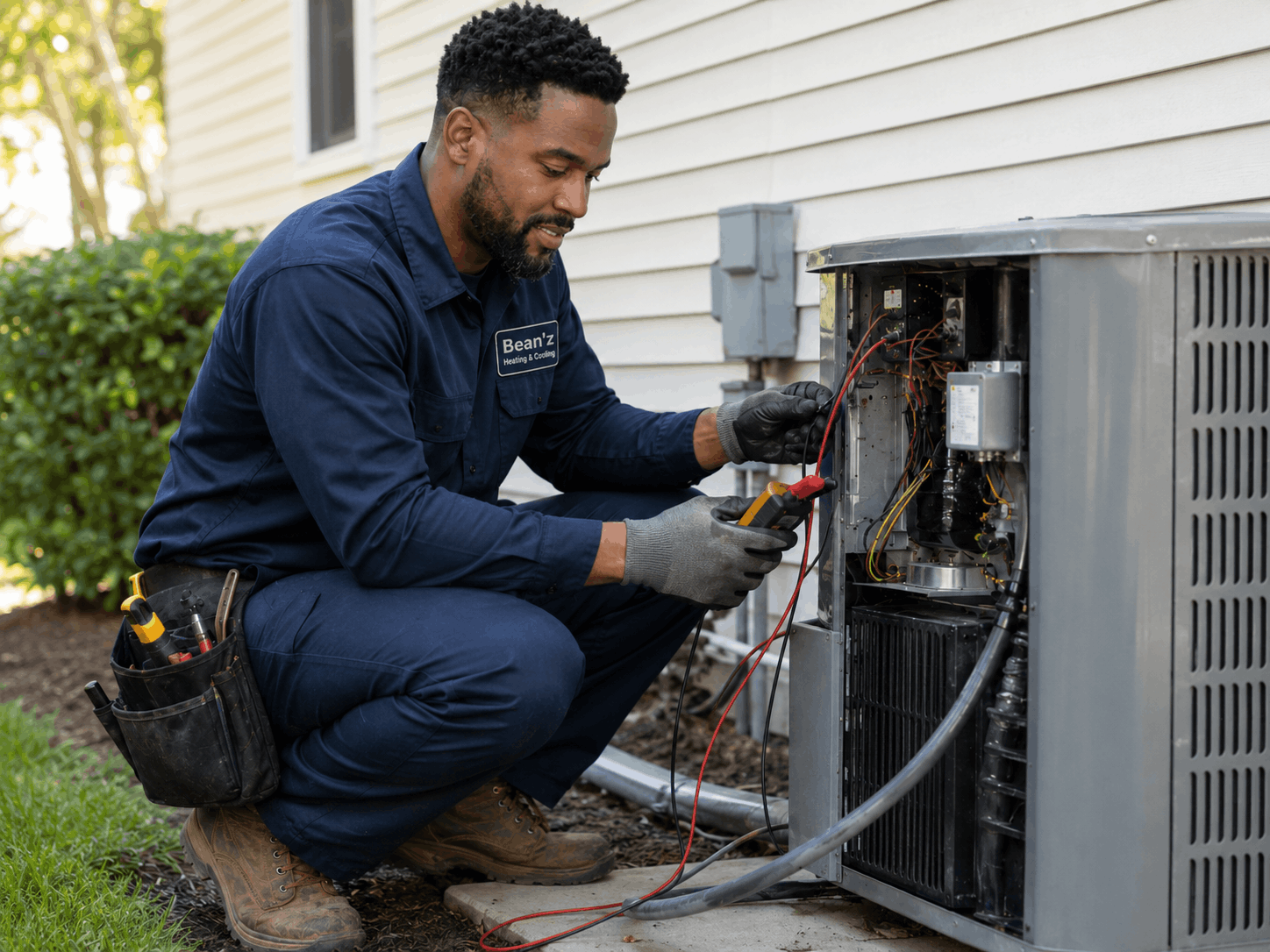
Testing may include the operating sequence, voltage and amperage, ignition and safeties, venting observations, boiler temperature or pressure, circulation, supply and return readings, total external static pressure, drainage, and refrigerant performance when applicable.
Call volume changes with weather. We provide the next realistic appointment window after confirming the address, equipment, affected area, and access.
Standard HVAC diagnostic
The fee covers the service call and testing required to identify the active failure on the scheduled system. Parts, repair labor, refrigerant, code corrections, additional systems or zones, and replacement equipment are quoted separately for approval.
Book the DiagnosticChoose the South Chicago service path by system and symptom
Furnace, controls & forced-air delivery
For no heat, repeated ignition attempts, pressure-switch or limit faults, a blower that will not start, short cycling, a thermostat that does not bring on the correct unit, or vents that never warm certain rooms. We follow the call through low voltage, safeties, ignition, flame proving, blower operation, temperature rise, venting, filter condition, and accessible supply and return paths.
Active breakdowns belong under furnace repair. A working system that needs seasonal inspection and cleaning belongs under a furnace tune-up.
Central AC, heat pumps & drainage
For warm supply air, a silent outdoor unit, frozen tubing or coil, water near the furnace, weak room cooling, breaker or disconnect trouble, failed capacitors or motors, or refrigerant performance concerns. Testing can include the thermostat call, line and control voltage, amp draw, airflow, temperature change, condensate safeties, coil condition, pressures, superheat, and subcooling when applicable.
Use AC repair for a breakdown, AC maintenance for a working-system tune-up, or review heat-pump options when planning replacement.
Boilers, radiators & separate zones
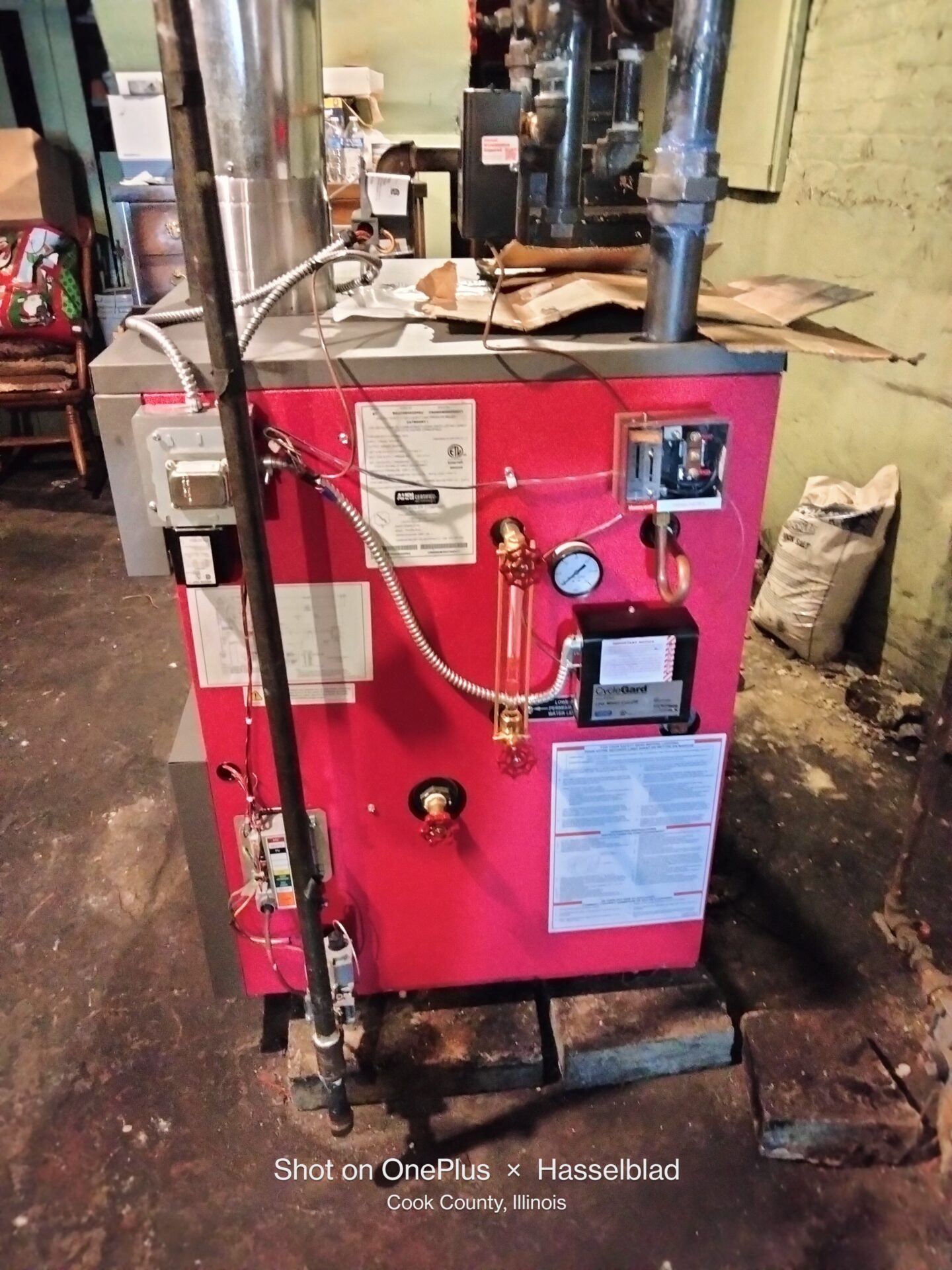
For a boiler that will not fire, some radiators staying cold, uneven steam or hot-water heat, failed pumps or zone valves, pressure concerns, visible leakage, control trouble, or one apartment losing heat while another remains comfortable. We identify steam versus hot water, determine which zone or thermostat serves the complaint, and inspect accessible piping, controls, circulation, venting, and safeties.
See boiler repair for active problems or boiler installation planning when the equipment condition changes the decision.
Match the affected space to the correct equipment first
| What the customer notices | Possible system path | What narrows it down |
|---|---|---|
| One apartment has no heat, but another floor is warm | Separate furnace, boiler zone, thermostat, electrical circuit, gas valve, damper, pump, or control wiring may serve that unit. | Confirm the floor and thermostat, trace the call to the responding equipment, check labels and disconnects, and avoid shutting down another occupant’s system. |
| Radiators near the boiler heat while distant rooms stay cold | Steam venting, hot-water circulation, trapped air, valve position, distribution balance, pipe condition, or a zone-control problem. | Identify steam versus hot water, check burner and safety operation, pressure or temperature, pump or vent response, valves, and which radiators lag. |
| Furnace runs, but upper or rear rooms never catch up | High static pressure, restricted return, weak branch airflow, duct leakage, blower setup, room load, or changes made after the original layout. | Temperature rise, filter and blower condition, supply and return readings, static pressure, accessible duct routing, vent airflow, and the pattern between rooms. |
| Central AC operates but one floor remains warm | Airflow imbalance, poor return path, duct loss, thermostat location, indoor coil condition, equipment capacity, or separate systems serving different areas. | Confirm which condenser and indoor coil serve the space, then compare temperature change, airflow, static pressure, electrical and refrigerant readings, and room conditions. |
| Water appears near the furnace or boiler | Condensate drain, pump or trap, frozen evaporator coil, humidifier, boiler relief or piping leak, or a non-HVAC plumbing source. | Protect the equipment, locate the active source, inspect drainage and operating pressure, and separate an HVAC leak from unrelated water before quoting a correction. |
Older South Chicago buildings need a distribution-first decision
A repair can be the profitable, practical choice when the failed part is available, the heat exchanger or compressor is serviceable, the venting and electrical conditions are safe, and the existing radiators or ducts still deliver usable comfort. The $129 diagnostic does not obligate the customer to buy equipment.
Replacement deserves a complete scope when a major component is unsafe or failed, breakdowns keep returning, parts are obsolete, operating condition is poor, or the existing system cannot serve the property reliably. In a two-flat or three-flat, copying the old model number does not prove which floors, zones, ducts, radiators, or condensers belong in the new plan. Compare the appropriate next step through our Chicago furnace installation, AC installation, boiler installation, or ductwork planning pages.
Before pricing installation, Bean’z reviews the equipment and removal path, connected load or room demand, supply and return distribution, boiler radiation when applicable, venting or chimney conditions, gas and electrical capacity, condensate route, line-set route, outdoor-unit location, thermostat and zone controls, and access to locked or shared spaces.
A finished basement, converted room, removed chimney, added AC system, or changed apartment layout may require a duct, piping, control, or separate-zone correction in addition to the equipment.
Three steps prevent wrong-unit testing and surprise scope
1. Identify the affected area
During scheduling, provide the full address, floor or apartment, rooms affected, thermostat message, equipment type, and whether another unit or zone still works. Mention locked basements, gates, shared mechanical rooms, roof access, parking limits, and pets.
2. Trace the correct system
Bean’z matches the complaint to its furnace, boiler zone, indoor coil, outdoor unit, duct path, radiators, disconnect, and controls. We then follow the operating sequence and take readings that separate the failed component from an airflow, circulation, access, or building limitation.
3. Approve the active correction
You receive the finding, repair scope, added price, parts timing, and any limitation before more work begins. After an approved repair, we operate the affected system and verify the repaired function under the conditions available during the visit.
Safety first: If you smell gas, a carbon-monoxide alarm sounds, or there is active smoke or fire, leave the property and contact the appropriate emergency service or utility from a safe location before scheduling HVAC work.
Breakdown diagnosis, maintenance, and installation estimates are different scopes
Active breakdown diagnostic
Use the $129 standard diagnostic when equipment will not start, shuts down, blows the wrong temperature, leaks, freezes, makes a new noise, trips a breaker, or fails one floor or zone. The visit identifies the active failure; approved repair work is priced separately.
Working-system maintenance
Use maintenance when the system operates and needs seasonal inspection, accessible cleaning, safety and performance checks, and a review of developing concerns. A tune-up is not a substitute for diagnosing equipment that is already failing.
Replacement or distribution estimate
Use an estimate when planning a furnace, AC, boiler, heat pump, ductless system, or ductwork change. Capacity, existing distribution, venting, utilities, drainage, controls, equipment access, permits, and the complete installation route determine the scope.
Frequently asked questions
Does Bean’z service South Chicago two-flats and three- or four-unit properties?
Yes, for many small residential properties when the equipment and work area are safely accessible. Tell us which floor or apartment is affected, whether other units share the system, and who is authorized to approve work. Access may be needed to the thermostat, basement or mechanical room, electrical panel, boiler piping, outdoor equipment, and locked or shared areas.
Does one $129 diagnostic cover multiple furnaces, AC systems, or boiler zones?
The $129 standard diagnostic covers the active complaint and system scheduled for testing. A separate furnace, condensing unit, boiler, zone, apartment, or unrelated problem may require additional diagnostic scope. Bean’z explains that before expanding the work.
Do you repair boilers and radiator-heating problems in South Chicago?
Yes. Bean’z diagnoses common steam and hot-water boiler complaints, including no heat, uneven radiators, ignition failure, control trouble, circulation or zone problems, pressure concerns, and visible leakage. Unsafe or leaking equipment may need to remain off until corrected.
Can you diagnose one room or floor that stays uncomfortable?
Yes. We first determine which equipment and distribution serve the area, then check the applicable airflow, static pressure, return path, duct route, radiator response, zone controls, temperature pattern, and equipment capacity. A failed part, distribution limitation, or room-load problem can create similar symptoms.
Is same-day HVAC repair guaranteed in South Chicago?
No. Same-day openings may be available, but weather, traffic, route, current emergency calls, access, and parts availability change the schedule. Call 312-593-6334 with the full address and equipment complaint for the next realistic window.
What should I prepare before the South Chicago HVAC appointment?
Clear a safe path to the thermostat, indoor equipment, electrical panel, radiators or vents, and outdoor unit. Unlock required gates or mechanical spaces, identify the affected floor or unit, secure pets, and make sure the owner or authorized decision-maker can approve the repair during the appointment.
Tell Bean’z the floor, equipment, and active symptom
Provide the complete service address, whether the whole property or one unit is affected, the thermostat message, and whether you see a furnace, boiler, central AC, heat pump, radiators, or ductless equipment. We will confirm current availability and explain the $129 diagnostic before dispatch.
Related South Chicago services: Visit furnace repair, AC repair, furnace installation, or request service.